
India is presently in a period of large-scale transformation regarding its health-care system. Non-communicable diseases currently lead the overall death count, as opposed to the traditional dominant position occupied by infectious diseases in the past. Over the past 30 years, the burden of disease in India has undergone dramatic changes resulting from changing lifestyles, urban growth, increased pollution, and increased life expectancy, as noted by both the World Health Organization (WHO) and the Indian Council of Medical Research (ICMR).
Understanding the leading killers in India is vital in developing preventative measures that include early detection and comprehensive planning for future public health needs. The following are the five leading causes of death in India.
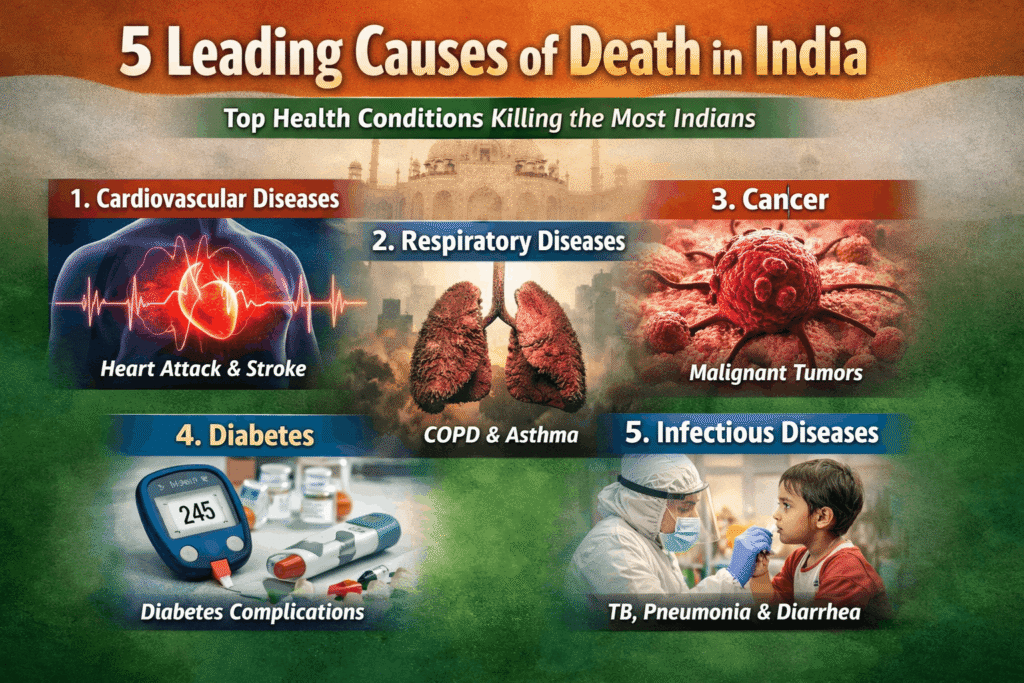
Table of Contents
1. Cardiovascular Diseases (Heart Disease and Stroke)
Cardiovascular diseases continue to be by far the most common cause of death in India. According to the WHO, CVD accounts for around 28-30% of deaths in India.
As CVD typically affects those individuals aged 65 years or older, the changing demographics of India over the last 30 years have resulted in younger people aged 30-50 years experiencing CVD at increasing rates.
CVD Risk Factors:
- High blood pressure.
- High cholesterol.
- Diabetes.
- Use of tobacco and alcohol.
- Physical inactivity and obesity.
Warning signs of CVD:
- Chest pain or tightness.
- Sudden shortness of breath.
- Sudden slurred or drooping facial expressions.
Prevention of CVD:
Early screening by your doctor/midwife, eating healthy and balanced meals, exercising at least 30 minutes a day, and quitting using any form of nicotine are all ways to minimize your cardiovascular risk. Early intervention can save lives from CVD.
References:
WHO Global Health Estimates, India Fact Sheet (2023)
2. Chronic Respiratory Diseases (COPD & Asthma)
Chronic Respiratory Diseases (CRD) in India were the second most common cause of death according to ICMR; they accounted for 10-11% of all deaths.
India has some of the highest levels of air pollution around the world. Long-term exposure to air pollutants will severely damage your lung health.
Causes of CRDs include:
- Air pollution (exposure to PM2.5)
- Smoking and secondhand smoke.
- Biomass-fuel-derived indoor air pollution.
- Chemicals and dust at the workplace.
Symptoms of Chronic Respiratory Disease (CRD) include:
- A persistent cough.
- Wheezing.
- Shortness of breath during normal daily activities.
To prevent CRDs, there are several things you can do: you can switch to cleaner fuels for cooking, not smoke, wear a mask when in heavily polluted areas, and receive timely medical care if necessary.
ICMR Reference:
India State-Level Disease Burden Initiative Report

Image Source: pexels
Must read: Nipah Virus Returns to West Bengal After 19 Years: Symptoms, Spread, Risk and What Experts Say
3. Cancer (Malignant Neoplasms)
Cancer is becoming one of the most rapidly growing causes of death in India. According to WHO and ICMR, it had accounted for about 10% of the total mortality in India.
The problem with cancer is many people are diagnosed at a later stage when the cancer is at an advanced stage.
Some of the most prevalent cancers in India are:
- Lung Cancer.
- Breast Cancer.
- Cervical Cancer.
- Oral/Throat Cancer.
Four common risk factors for cancer include:
- Tobacco use (either smoking or chewing tobacco).
- Drinking alcohol.
- Diet and Obesity.
- Virus Infection (HPV, Hepatitis B).
Why early detection matters:
Regular screening, awareness of early symptoms, and preventative vaccinations can help to minimize cancer-related deaths by up to 95 percent.
WHO Reference:
WHO Cancer Country Profiles – India
4. Diabetes and Diabetes-Related Complications
India has been described as the “diabetes capital of the world.” The disease itself is not always a cause of immediate death, but the complications that result from it contribute to a significant percentage of overall mortality rates.
According to the ICMR, diabetes and its complications account for approximately 3 to 4% of total deaths in India; however, they also indirectly cause additional deaths due to heart disease, kidney failure, and stroke.
There are a number of contributing factors, such as:
- Poor diet
- Obesity
- Sedentary lifestyles
- Genetic predispositions
Signs and symptoms of diabetes:
- Increased thirst and urination
- Continuing fatigue
- Slow healing of wounds
Prevention of diabetes and related complications may be achieved through the implementation of lifestyle changes, regular monitoring of blood sugar levels, and seeking early medical intervention when needed.
ICMR Reference:
National Diabetes and Cardiovascular Disease Surveillance Data
5. Infectious Diseases (TB, Pneumonia & Diarrheal Diseases)
While healthcare continues to improve, infectious disease is still the leading cause of death, particularly in children, the elderly, and lower socio-economic populations.
WHO estimates that infectious diseases account for approximately 7 to 8% of total deaths in India.
The major causes include:
- Tuberculosis (TB)
- Pneumonia
- Diarrhoeal diseases
Despite active efforts to reduce the burden of TB, India remains home to the highest burden of TB globally.
The reason for the high rates of mortality associated with TB is primarily related to:
- Delays in diagnosis
- Poor sanitation and hygiene practices
- Limited access to healthcare services in rural areas
Preventative measures for controlling infectious disease include vaccinations, access to safe drinking water, proper sanitation, and early diagnosis and completion of treatment.
WHO Reference:
Global Tuberculosis Report – India

Image Source: pexels
Why Are Death Patterns Changing in India?
The transition from diseases associated with infections to those relating to a person’s way of life is happening due to a number of reasons, including:
- Rapid Urbanization,
- Pollution,
- Change in eating habits,
- Less Physical activity, and
- The Older Population
As per data provided by the World Health Organization, non-communicable diseases cause 63% of India’s deaths, demonstrating the necessity for more preventive healthcare measures.
What Can Be Done to Reduce Mortality?
To support India’s growing population’s health and well-being:
- Create stronger systems of preventive healthcare at the state level.
- Increase public education and awareness about the importance of an ongoing program of preventative healthcare.
- Work to improve both air quality and sanitary conditions within cities
- Help foster the development of a healthier lifestyle through physical activity and healthy food choices.
- Enable individuals to afford and gain access to necessary, institutionally funded healthcare.
Conclusion
It can clearly be seen from the leading causes of mortality within India that the majority of deaths in our country could be prevented with early intervention and healthy lifestyle choices. Cardiovascular disease, respiratory illness, cancer, diabetes & infectious diseases are the major causes of mortality within India.
Simply by focusing on preventive care and increasing awareness about the importance of preventive care, including education about early detection of life-threatening diseases, India would experience a significant reduction in overall mortality and an improvement in the overall quality of life for its citizens.
Must read: Government Blocks 242 Illegal Betting Sites to Curb Online Gambling in India

1 thought on “These 5 Diseases Are Killing the Most Indians—No. 1 Is a Silent Threat”