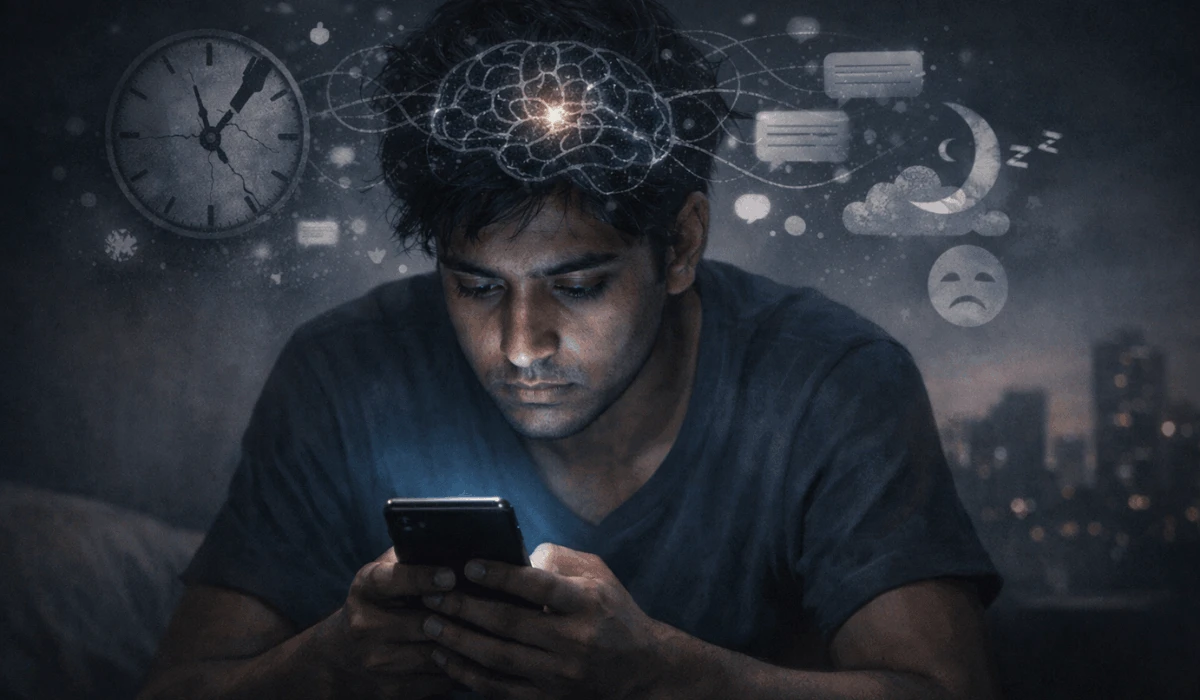
Mobile phones were designed to make life easier—but excessive use is now raising serious mental health concerns worldwide. Experts in the health field as well as psychologists state that “mobile addiction” is revolutionizing how we use our brains and is causing changes in the way we process information, our emotional well-being, our quality of sleep, our attention span, and our ability to comprehend the things that we learn.
Health care providers are unanimous in stating that “mobile addiction” has gone beyond being merely a lifestyle issue; it is, instead, a behavioral health hazard for teenagers, adult students, and adults entering the workforce.
Image source: pixabay
Table of Contents
What Is Mobile Addiction?
Mobile addiction, or mobile phone dependency, is defined as a behavior where a user is addicted to their phone and experiences a powerful, uncontrollable desire to use their mobile telephone, which negatively impacts the user’s mental health, sleep patterns, work productivity, and social relationships with others.
Psychologists believe that mobile addiction is created by habits that are rewarded by a chemical called “dopamine” in the brain. The behaviors that keep an individual addicted to their phone are the use of “constant scrolling,” receiving “notifications,” and receiving “validation” from social media.
Common indicators of mobile addiction are:
- Feeling the need to check your mobile phone every few minutes.
- Having “anxiety” when your mobile phone is out of reach.
- Engaging in an excessive amount of “screen time” during the night.
- Ignoring those persons who are physically present.
- Having difficulty sleeping and/or experiencing mood descent
How Mobile Addiction Impacts Mental Health
1. Mobile Addiction and Anxiety
Excessive use of mobile devices, particularly social media, is strongly associated with depression.
The ability to compare one’s life, which is typically filtered and doctored on social media, to others can create:
- Low Self-Esteem
- A Sense of Inadequacy
- Loneliness
- Emotional Numbness
Many individuals spend just a few hours scrolling through social media, and yet, when they finish, they may feel a sense of emptiness. Chronic emotional drain over time will result in a greater chance of developing depressive symptoms.
2. Depression and Emotional Exhaustion
Using a mobile device in your bed at night before going to sleep is one of the worst habits to develop, and it will also impact your mental health.
Repeated exposure to blue light emitted from smartphones has a negative impact on the production of melatonin (the hormone responsible for sleep). Individuals exposed to blue light prior to going to bed may experience:
- Difficulty falling asleep
- Frequent Awakenings During The Night
- Poor Sleep Quality
- Fatigue Upon Waking in The Morning
Chronic sleep deprivation has been shown to exacerbate anxiety, depression, itchiness, irritability, and other memory issues.
3. Sleep Disorders and Mental Fatigue
Mobile phone use, particularly late at night, is one of the worst things you can do for your mental health.
Exposure to blue light inhibits the production of melatonin, the hormone that causes us to fall asleep. This results in:
- inability to initiate sleep
- Frequent awakenings throughout the night
- Poor quality of sleep
- Fatigue in the morning and brain fog
Chronic sleep deprivation worsens anxiety, depression, irritability, and memory problems.
4. Reduced Focus, Memory, and Brain Function
People with mobile addictions tend to have shorter attention spans. Because they are constantly exposed to short, quick videos, the brain develops a need for constant stimulation. Consequently, they have a harder time:
- Concentrating
- Studying or reading (deeply),
- Retaining information
- Effectively completing tasks
Neurologists believe that excessive phone usage can lead to mental burnout and diminished cognitive ability due to overstimulation.
5. Social Isolation and Relationship Problems
People who suffer from mobile addiction are more likely to feel lonely, despite being able to “connect” to others through their phones:
- Decrease in the number of face-to-face conversations
- Decrease in the ability to form emotional bonds with family members
- Decrease in the quality of familial/social relationships
By not having as many real-life connections, people experience increased levels of loneliness, stress, and emotional distress, which are detrimental to their mental health.
Image source: pixabay
6. Irritability, Stress, and Mood Swings
Overexposure to the brain’s reward center creates a feeling of emotional imbalance.
Some symptoms that mobile-addicted individuals cite include:
- Irritability
- Anger and frustration with no obvious cause
- Mood swings
- Decreased emotional control
The brain does not receive enough time to rest/recover.
Why Mobile Addiction Is a Growing Mental Health Crisis
Warning: Mobile phone use could result in damage to one’s mental health. Here are four reasons why:
- Mobile addiction grows quietly.
- Social acceptance of mobile phones is widespread.
- Mobile phone use begins at an early age.
- Mobile phones can aggravate existing mental illnesses.
Most people will not seek help for their mental well-being until they reach a point of extreme anxiety, depression, or burnout.
Who Is Most at Risk?
There are many people at risk for developing a mobile addiction:
- Teens and students.
- Young professionals.
- Those with anxiety and/or depression.
- Those with disruptive sleep patterns.
- Those who frequently use social media.
How to Reduce Mobile Addiction and Protect Mental Health
Mental health professionals suggest:
- Limit your daily use of mobile devices.
- Turn off your phone at least one hour before sleeping.
- Turn off notifications that are not necessary.
- Do a weekly internet detox
- Replace scrolling with physical fitness, walking, and/or relaxing techniques such as meditation.
Even minor modifications can provide a vast improvement in cognitive and emotional well-being.
When to Seek Professional Help
If your mobile phone use has resulted in the following issues, you should seek assistance from a mental health provider.
- Continuous anxiety or depressed feelings.
- Panic attacks.
- Excessive issues sleeping.
- Deteriorating regular performance.
Having an early intervention can prevent extensive emotional trauma and/or damage in the future.
Image source: pixabay
Final Thoughts: This Is a Wake-Up Call
Mobile phones can be great tools for improving our lives; however, repeated and irresponsible usage can have a substantial connection to deteriorating mental health throughout the world.
So if you often feel exhausted, anxious, unfocused, and drained of your energies, your mobile phone is likely doing more damage than any positive effect.
Note: A notification on your phone is not worth sacrificing your mental peace for.
References & Medical Sources (WHO / ICMR)
World Health Organization (WHO)
WHO has said that too much time on screens and a dependency on screens pose mental health risks. Some negative behaviors with technology cause anxiety and depression, have a negative impact on sleep patterns, and reduce psychological well-being. Young adults were identified as being at higher risk than other age groups due to screen time.
WHO stated that education about the benefits and limitations of screen time, maintaining a healthy balance with technology, and providing access to early mental health care services are important to reduce the effects of excessive screen time.
Indian Council of Medical Research (ICMR)
The ICMR has also noted an increase in mental health problems in India. Research funded by ICMR has shown that excessive smartphone usage is linked to high levels of stress, disturbed sleep, shortened focus, and emotional dysregulation.
ICMR stated that lifestyle changes and public education are effective preventative measures.
Medical Disclaimer
This publication has been written for educational purposes and should not replace or be construed as medical advice from a qualified medical professional. Anyone who is experiencing severe emotional distress or mental health problem(s) is encouraged to seek help from a qualified health care provider

2 thoughts on “How Mobile Addiction Impacts Mental Health: A Silent Crisis Affecting Millions”